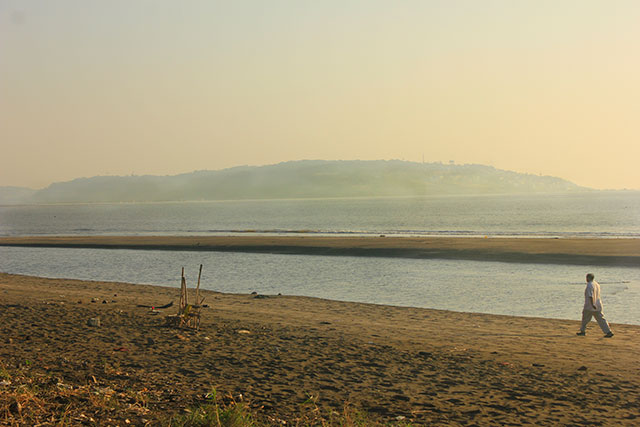
Suruchi Beach is a big beach. It gets its name from the suru (Casuarina) trees which line the beach. The beach is 7.6 km from Vasai Road railway station.
History of Suruchi Beach
Historically part of the greater Bassein area (now Vasai), the beach is near the ancient Vasai Fort (built in 1533-1590). The fort was an important Portuguese maritime base until its capture by the Marathas in 1739.
The area around the beach was part of the vibrant Vasai region, a key naval base that hosted 60,000 residents in its peak, featuring a thriving trade in timber, fish, and spices.
Following the capture of the fort by Chimaji Appa in 1739 and subsequent British rule, the area experienced a decline in commercial power. It gradually evolved into a residential area.
Casuarina Trees
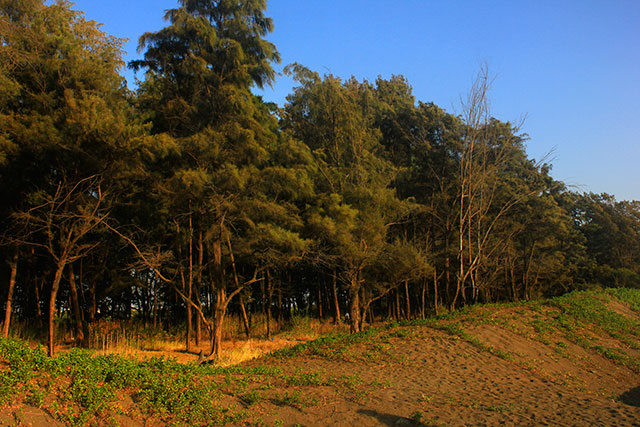
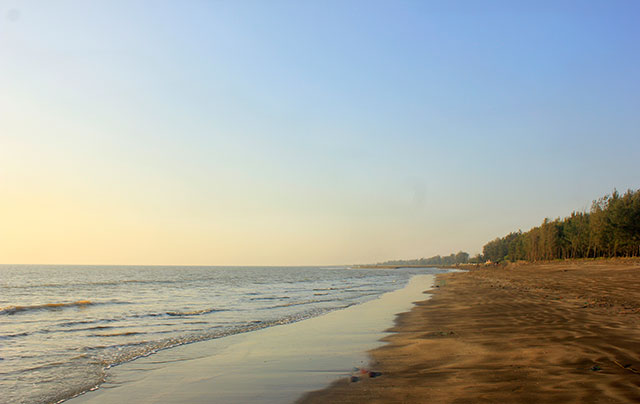
All along the edge of the beach, Casuarina (Suru in Marathi) trees grow in profusion. When sea breeze blows through the trees, they produce an unmistakable sound which lends it the name Whistling Pine. The tree is native to India, Australia and Eastern Africa.
Suru trees bring a natural buffer zone for the shore and help minimise damages during disasters like cyclones. This plantation helps prevent coastal reduction and provides shelter against extreme wind as well.
A Walk on The Beach
There is a iron gate at the entrance to the beach. I am not sure whether they lock it at any time. After we pass the gate, there is a parking area for visitors.
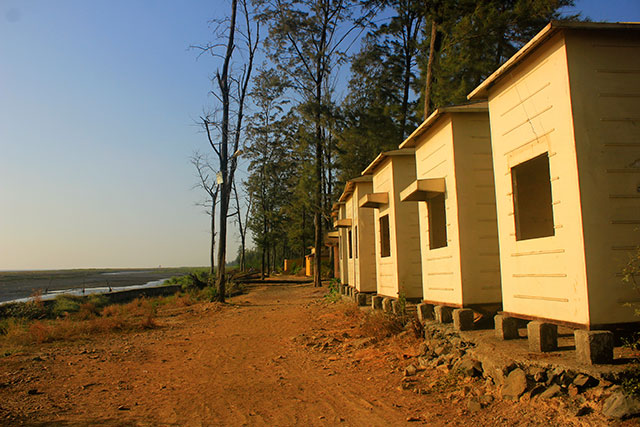
Visitors can see a line of beach shacks on one side of the beach. They had no signs of occupancy.
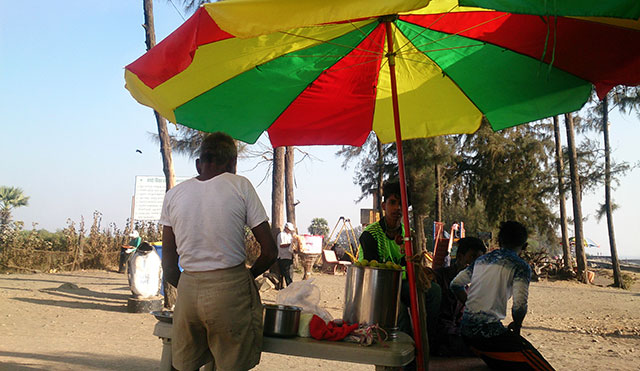
We found a small shop selling tea, cold drinks and biscuits. Apart from that, there is hardly anything on offer for thirsty visitors. There are no washrooms either.
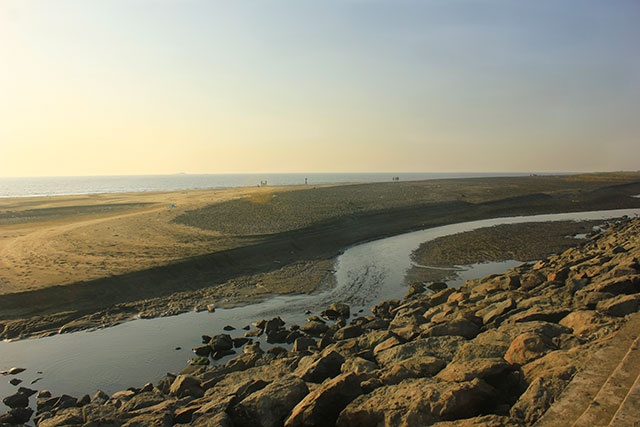
The sand was wet. The sea had come up the beach at high tide. There was a sea wall to protect the Casuarina trees. The wall was wide and we could walk on it for some distance.
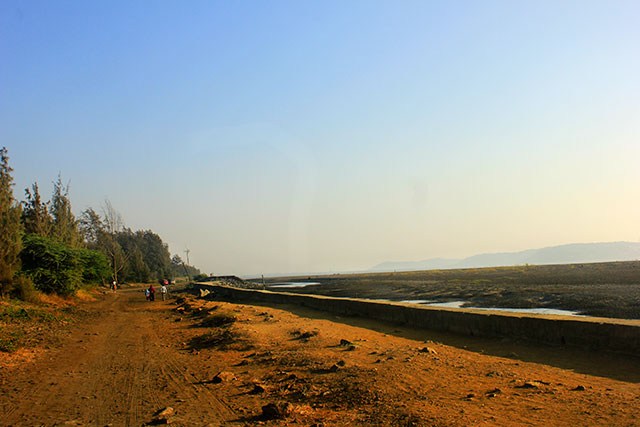
There were not many people on the beach. But on weekends, it tends to get crowded. The sea had washed ashore pieces of garbage along the shore. This was rather surprising because the beach is in an isolated area. May be the trash was dumped into the sea from across the coast in Mumbai.
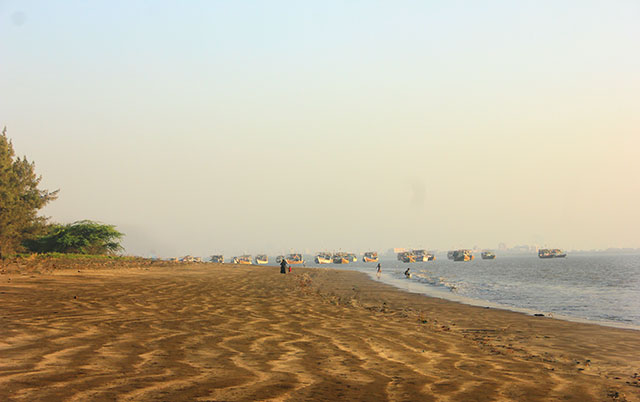
After walking along the beach, I noticed many fishing boats moored near the shore. Apparently a Koli village exists in the vicinity. On looking out over the sea, we could make out the shoreline of Bhayandar in the distance.
Getting There
Buses go up to Parnaka in Vasai Gaon. From there, it is another 1.6 km to the beach. It is a walk of about 20 minutes. Auto fare is Rs. 50. The road from Parnaka to the beach is in poor condition. The closest railway station is Vasai Road (7.6 km)
Suruchi Beach is in an isolated area. There are no security guards or life guards. The place gets dark after sunset.
If you liked the post, you could…
Join more than 5,000 fans of UASATISH by liking us on Facebook, or follow us on Twitter and Instagram.